Radial nerve palsy is a condition that can affect movement and sensation in the arm, wrist, and hand. Common symptoms include wrist drop, difficulty straightening the fingers, hand weakness, and numbness or altered sensation in parts of the hand. It may occur due to an injury, fracture, prolonged pressure on the radial nerve, or other …

Radial nerve palsy is a condition that can affect movement and sensation in the arm, wrist, and hand. Common symptoms include wrist drop, difficulty straightening the fingers, hand weakness, and numbness or altered sensation in parts of the hand. It may occur due to an injury, fracture, prolonged pressure on the radial nerve, or other underlying medical conditions.
Early diagnosis is important because radial nerve palsy treatment depends on the severity, location, and underlying cause of the nerve injury. Some cases may improve with rest, physiotherapy, splinting, and observation, while more severe nerve injuries may require surgical treatment.
If you are looking for radial nerve palsy treatment in Delhi, consulting an experienced specialist is an important step. Dr. Anubhav Gupta, regarded as one of the best hand surgeons in Delhi, India, can evaluate the affected nerve, assess muscle and hand function, and recommend an appropriate treatment plan based on the individual condition. Depending on the diagnosis, treatment may involve conservative management, nerve repair, nerve grafting, or other surgical procedures when required.
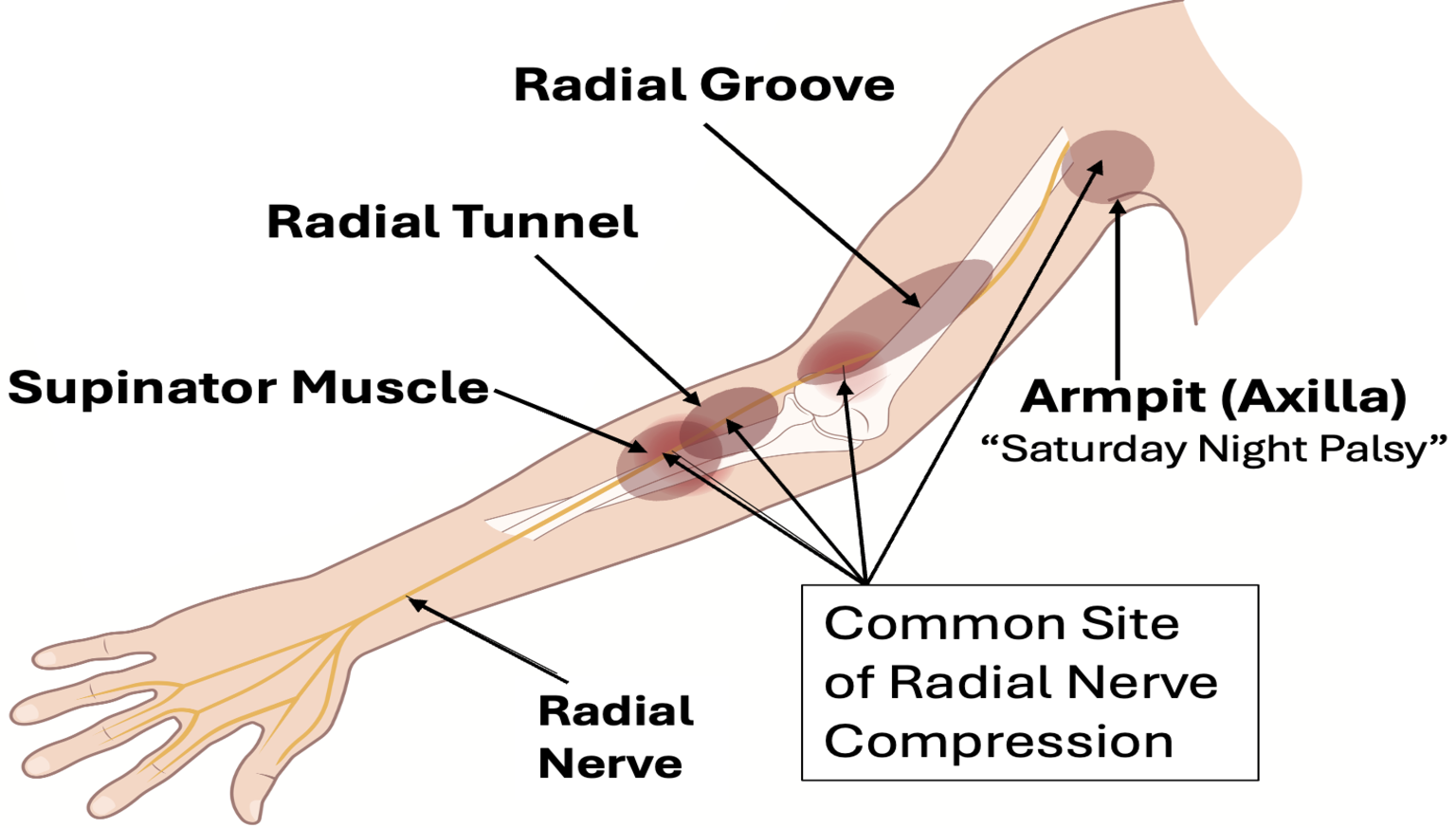
What Is Radial Nerve Palsy? The radial nerve is one of the major nerves of the upper limb. It travels from the upper arm toward the forearm and hand and helps control several muscles responsible for wrist and finger extension. When the radial nerve is compressed, stretched, bruised, or damaged, it can result in a condition known as radial nerve palsy. One of the most noticeable symptoms is wrist drop, where a person has difficulty lifting or extending the wrist.
Common Causes of Radial Nerve Palsy
Radial nerve palsy can occur for several reasons. Common causes include:
- Upper-arm fractures, particularly humerus fractures
- Direct trauma or injury to the arm
- Compression of the radial nerve
- Prolonged pressure on the arm
- Dislocation or other orthopedic injuries
- Surgical or medical procedures affecting the nerve
- Penetrating injuries
- Nerve tumors or other less common conditions
- Repetitive or prolonged pressure around the nerve
The exact cause should be identified because treatment and recovery can vary significantly between patients.
Symptoms of Radial Nerve Palsy
Symptoms depend on where and how severely the radial nerve has been affected.
Common symptoms include:
1. Wrist Drop
Wrist drop is one of the characteristic signs of radial nerve dysfunction. The patient may be unable to properly extend the wrist.
2. Difficulty Straightening the Fingers
Radial nerve dysfunction can affect the muscles responsible for finger extension, making it difficult to straighten the fingers.
3. Weak Grip
Although the radial nerve does not directly control all grip muscles, weakness in wrist positioning can make gripping objects difficult.
4. Numbness or Altered Sensation
Some patients experience numbness, tingling, or reduced sensation over the back of the hand and thumb-side area.
5. Difficulty Performing Everyday Activities
Patients may have difficulty with activities such as:
- Holding objects
- Typing
- Writing
- Using tools
- Opening containers
- Lifting objects
- Performing work-related hand movements
Persistent weakness or loss of function should be evaluated by a qualified specialist.
How Is Radial Nerve Palsy Diagnosed?
A doctor usually begins with a detailed medical history and physical examination.
Depending on the suspected cause, additional investigations may include:
- X-rays – to identify fractures or bone abnormalities
- Ultrasound – may help assess the nerve in selected cases
- MRI – can provide information about surrounding soft tissues and certain nerve injuries
- Nerve conduction studies
- Electromyography (EMG) – helps assess nerve and muscle function
These tests can help determine the location and severity of nerve damage and whether the nerve shows signs of recovery.
Radial Nerve Palsy Treatment Options
There is no single treatment that is suitable for every patient. Treatment is selected according to the cause, type, severity, and duration of the nerve injury.
1. Observation and Monitoring
Some radial nerve injuries, particularly certain nerve bruises or temporary compression injuries, may recover without surgery.
During this period, the doctor may monitor:
- Muscle strength
- Sensation
- Wrist and finger movement
- Electrophysiological findings
- Signs of nerve regeneration
Regular follow-up is important to ensure recovery is progressing appropriately.
2. Splinting
A wrist or hand splint may be recommended to maintain the wrist in a functional position.
Splinting can help:
- Support the wrist
- Improve hand function
- Prevent stiffness
- Maintain useful positioning during recovery
The type and duration of splinting should be determined by a healthcare professional.
3. Physiotherapy and Hand Therapy
Rehabilitation can be an important part of radial nerve palsy treatment.
Depending on the patient’s condition, therapy may focus on:
- Maintaining joint mobility
- Preventing stiffness
- Preserving muscle function
- Improving hand coordination
- Gradually strengthening recovering muscles
- Supporting functional use of the hand
A customized rehabilitation plan is generally preferable to exercises without professional assessment.
At our hand surgery clinic, skilled Plastic and Hand Surgeons restore hand strength, flexibility, and function with advanced techniques. Led by Dr. Anubhav Gupta, the Best Hand Surgeon in Delhi, we treat nerve injuries, brachial plexus palsy, fractures, and deformities. Trusted as the Best Hand Surgeon in India and your expert Hand Doctor Near Me
Brachial plexus is a vital nerve network that controls movement and sensation in the shoulder, arm & hand. Injury may cause weakness or paralysis. Dr. Anubhav Gupta is one of the best brachial plexus surgeon in Delhi, offering advanced brachial plexus injury treatment & recovery care at one of the best brachial plexus clinic in Delhi
At Dr. Anubhav Gupta’s practice, we believe in a comprehensive and patient-centric approach to breast surgery in Delhi. Our focus is on accurate diagnosis, personalized treatment plans, and advanced surgical techniques tailored to each patient’s unique needs. Whether it’s cosmetic breast enhancement, breast reconstruction, or corrective procedures, we prioritize patient safety, natural results, and a smooth recovery.
Radial Nerve Palsy Surgery
Surgery may be considered when there is significant nerve damage, a nerve injury that is unlikely to recover spontaneously, persistent compression, or inadequate recovery over time.
The surgical procedure depends on the specific type of nerve injury.
Nerve Repair
If the nerve has been completely cut and the damaged ends can be appropriately approximated, nerve repair may be considered.
Nerve Grafting
When a gap exists between damaged nerve ends, a nerve graft may sometimes be required to bridge the gap.
Nerve Transfer
In selected cases, a functioning nerve may be redirected to restore activity to muscles affected by radial nerve damage.
Tendon Transfer
When useful nerve recovery is unlikely or has not occurred, tendon transfer surgery may be considered to restore certain hand and wrist functions.
The appropriate procedure depends on the patient’s examination, injury pattern, timing, and overall condition.
How Long Does Radial Nerve Palsy Take to Recover?
Recovery time varies from person to person.
The timeline depends on:
- Type of nerve injury
- Location of the injury
- Severity of nerve damage
- Cause of the palsy
- Patient’s age and general health
- Time between injury and treatment
- Response to rehabilitation
Nerves generally recover slowly. Therefore, improvement may take months rather than days or weeks in many cases.
Your doctor may use clinical examinations and nerve studies to monitor recovery and determine whether additional treatment is required.
When Should You See a Hand Surgeon?
You should consider specialist evaluation if you experience:
- Sudden wrist drop
- Persistent hand or wrist weakness
- Loss of finger extension
- Numbness after an injury
- Weakness following a humerus fracture
- Symptoms that are not improving
- Persistent symptoms despite conservative treatment
Early specialist assessment can be particularly important after a significant traumatic injury.
Best Doctor for Radial Nerve Palsy Treatment in Delhi
For patients searching for a radial nerve palsy doctor in Delhi, choosing a specialist with experience in complex hand, nerve, and upper-limb conditions is important.
Dr. Anubhav Gupta is a reputed hand surgeon in Delhi with expertise in the evaluation and management of complex hand and upper-limb conditions, including nerve-related problems.
Patients considering radial nerve palsy treatment in Delhi can consult Dr. Anubhav Gupta for an individualized assessment and treatment plan based on the cause and severity of the nerve injury.
Rather than choosing treatment based only on online information, patients should undergo a proper clinical examination and relevant investigations before deciding between observation, rehabilitation, or surgery.
Why Choose an Experienced Hand Surgeon?
Radial nerve palsy can involve both nerve function and hand movement. An experienced hand surgeon can evaluate the condition from a functional perspective and determine whether further intervention is necessary.
A specialist evaluation can help answer important questions such as:
- Where is the nerve injury located?
- Is the nerve likely to recover naturally?
- Is there ongoing nerve compression?
- Is surgery necessary?
- Would nerve repair or nerve transfer be appropriate?
- Could tendon transfer be considered?
- What rehabilitation is required?
The goal is not simply to treat the nerve injury but to achieve the best possible functional recovery of the hand and upper limb.
Conclusion
Radial nerve palsy is a treatable condition in many patients, but treatment depends on the cause, severity, and extent of nerve damage. Some cases improve with observation, splinting, and rehabilitation, while others may require nerve repair, nerve grafting, nerve transfer, or tendon transfer.
If you are experiencing wrist drop, finger extension weakness, numbness, or persistent hand weakness, seek professional evaluation rather than delaying treatment.
For patients looking for radial nerve palsy treatment in Delhi, Dr. Anubhav Gupta, an experienced hand surgeon in Delhi, can evaluate the condition and recommend an individualized treatment approach based on the patient’s diagnosis and functional needs.
Book a Consultation
It’s easy and free!